













 History of Nebraska Passenger Vehicle License Plates
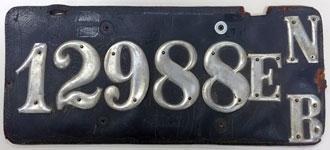
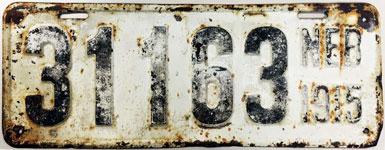
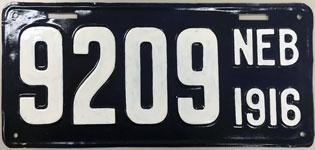
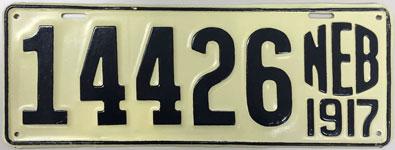
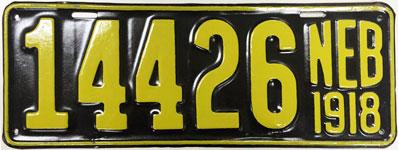
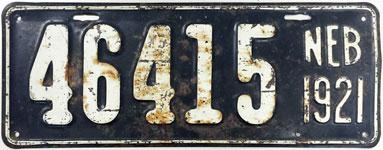
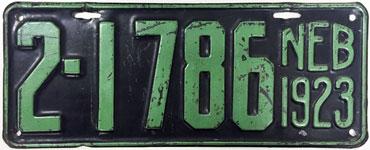
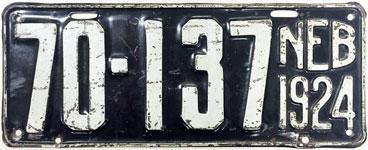
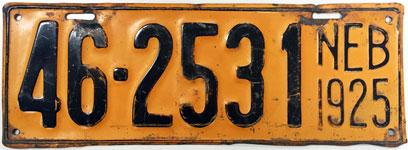
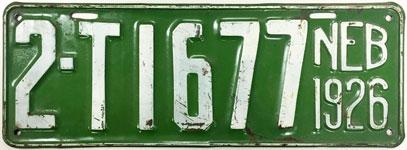
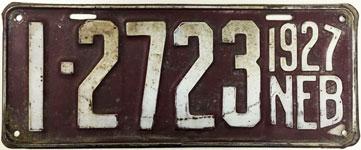
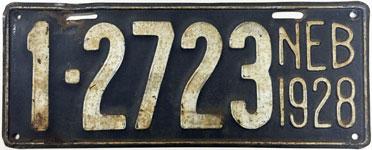
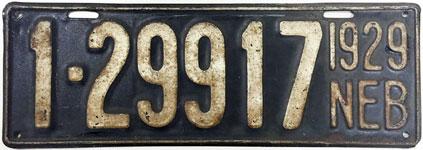
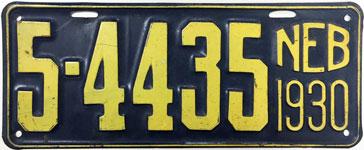
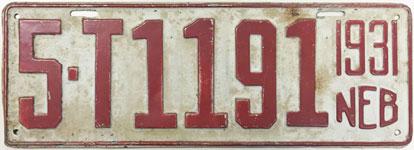
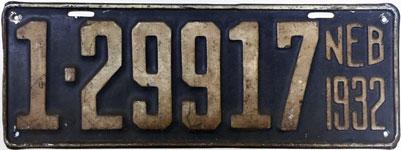
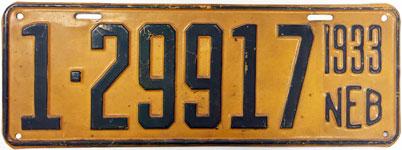
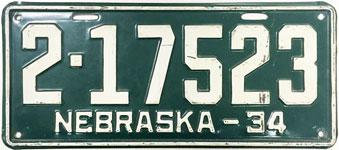
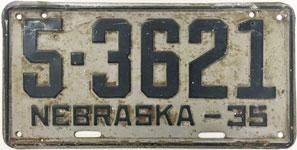
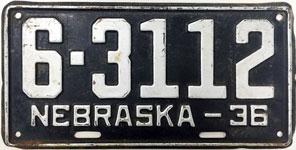
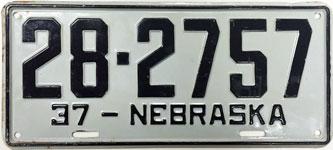
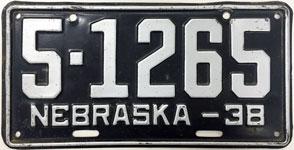
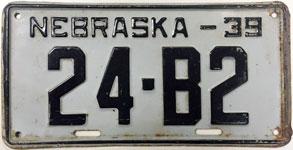
Motor vehicles were first registered in June 1905. Individuals made their own plates, and registrations were recorded with the Secretary of State. The plates were made of leather with metal numbers; this practice continued until 1915 when the state began issuing the plates. The Secretary of State assigned numbers to the plates, which were then made of metal. From 1915 to 1939 the plates were two colors, which changed every year.
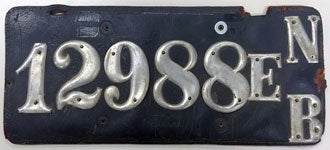
Nebraska license plate from 1903-1914
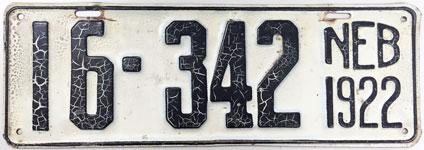
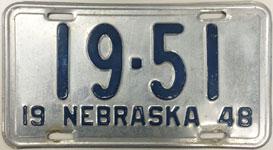
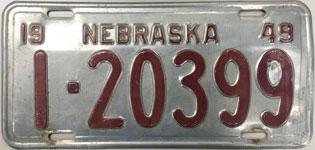
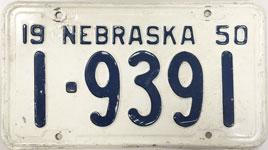
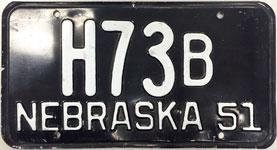
Motor vehicle supervision transferred to the Bureau of Roads and Bridges in 1919 where it remained until 1921 when it was transferred to the Department of Public Works. In 1922, the Department of Public Works established the practice of using prefix numbers to identify the counties in which vehicles were registered. Each county was assigned a number based on the number of registered vehicles in the county at that time. The county with the most vehicles, Douglas, was assigned the number 1; the county with the second highest number of vehicles, Lancaster, was assigned number 2; and so forth. For one year, 1951, the county number designation was changed from numeric to a one- or two-digit alpha code.
From 1903 to 1920 only a single plate was issued for each vehicle. In 1921 two plates were issued for each vehicle. Beginning in 2017 owners of passenger vehicles not manufactured or equipped with a front license plate bracket could opt to purchase a single plate decal to be displayed on the driver side of the windshield in lieu of a front plate. Initially, the fee for the purchase was $100.60 annually; effective September 1, 2019 the annual fee was reduced to $50.60.
In 1933 the motor vehicle supervision was again transferred, this time to the Department of Public Works where it remained until the Legislature crated a separate Department of Motor Vehicles in 1957. Oversight of the license plate program continues to be managed by the Department of Motor Vehicles today.
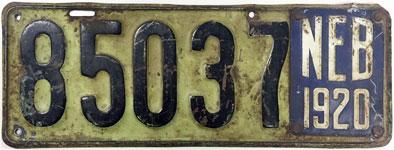
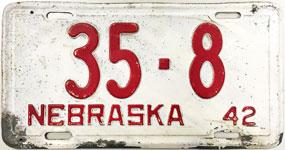
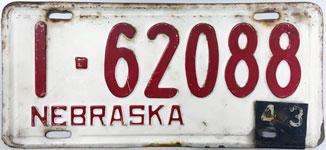
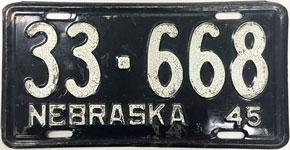
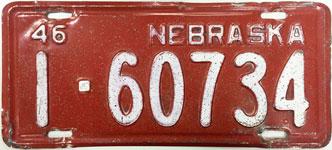
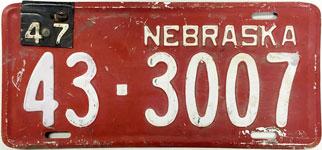
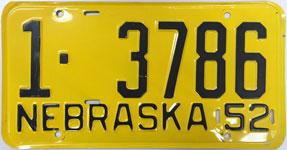
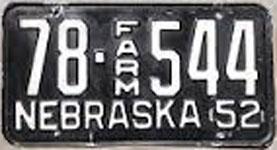
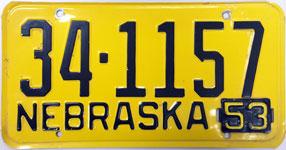
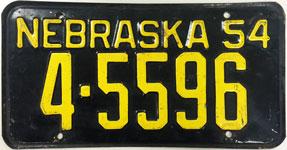
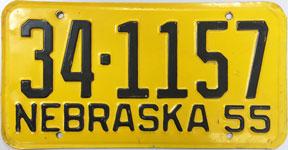
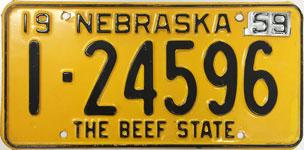
Except for 1920, plates were issued annually until 1943. In 1942 the plates returned to two colors, changing annually. A metal revalidation tab was issued in the years 1920, 1943, 1944, 1947, 1953 and 1959, but after 1960 the tabs became a decal-type material. In 1952 to 1955 the Goldenrod was added to the plates. In 1966, special reflective sheeting was used while numbers were stamped and painted on the plates.
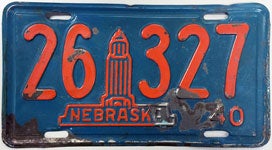
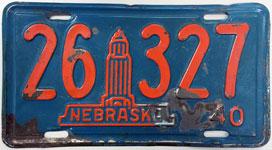
Nebraska license plate from 1940
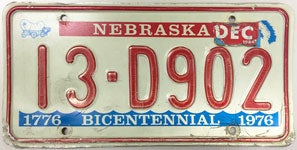
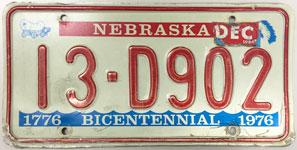
Nebraska license plate form 1976-1983
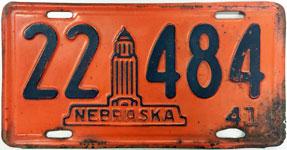
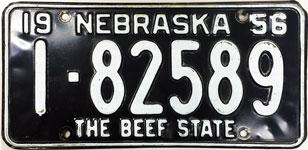
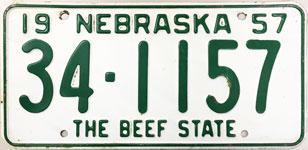
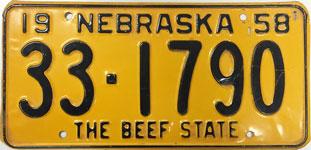
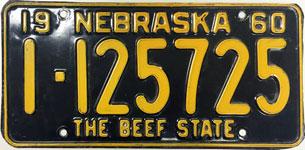
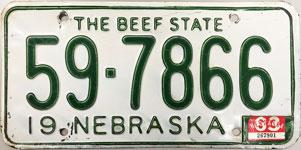
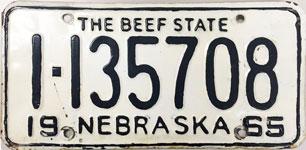
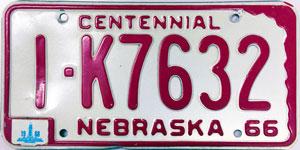
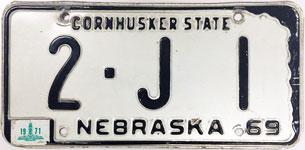
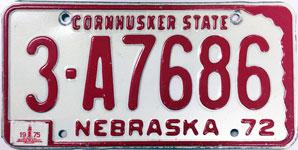
In 1940 - 1941 the Statehouse Emblem was added. Beginning with the 1956 license plates, a slogan “The Beef State” was embossed on the plates and remained until 1965. In 1966, the word “Centennial” was embossed on the plates in honor or the States Centennial Celebration in 1967 for the license plate series expiring in 1968. In 1969, the slogan “Cornhusker State” was embossed on the plate until 1975.
In 1976 a bicentennial plate honoring the United States Bicentennial was issued to all passenger vehicles. It had the word “Nebraska” on a red banner at the top and the slogan “1776 Bicentennial 1976” on a blue banner at the bottom. In the upper left and corner was a blue sketch of a covered wagon and in the upper right-hand corner was a blue sketch of a Native American Chief.
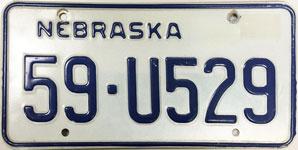
Beginning with the 1984 blue on white license plate with no slogan or graphic design, plates were to be reissued every three years.
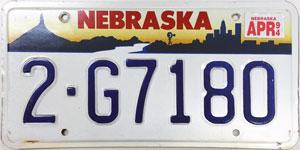
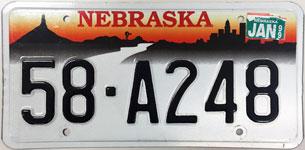
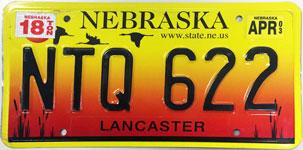
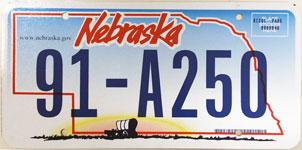
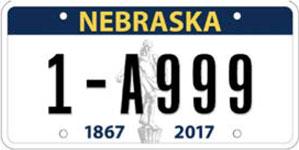
In January of 2002 the State began with issuance of the Alpha/Numeric License Plates. These plates are issued to residents of the three largest counties, Lancaster, Sarpy and Douglas.
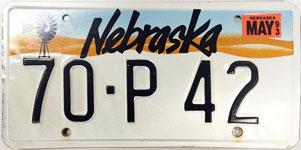
From 1962 through 2004, with the exception of the United States Bicentennial License plate series utilized from 1976 through 1983, new distinctive license plates were issued every three years. Starting with issuance of the 2005 plate series, issuance of new license plates changed from every three years to every six years. The reason for the long use of the Bicentennial plates series was the result of budgetary considerations. License plate production had been state general fund expenditure and to save funds, the then Governor and Legislators delayed that expenditure to save money.
In 1972 the Nebraska Legislature authorized the State of Nebraska to issue Message plates.
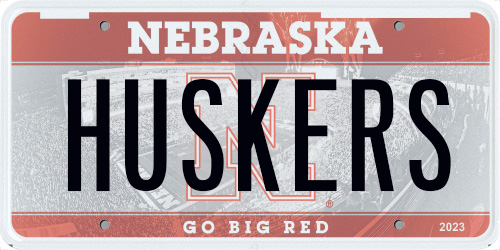
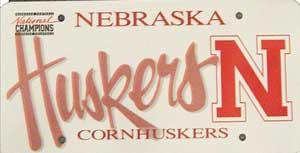
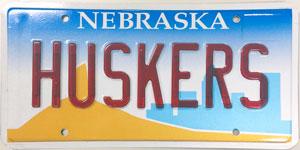
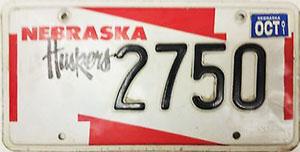
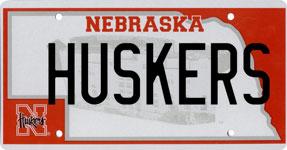
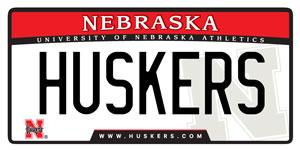
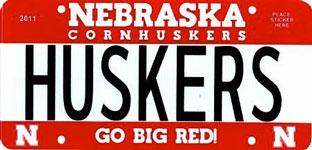
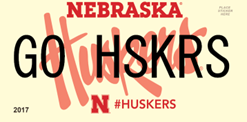
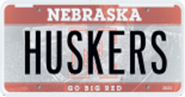
The State of Nebraska began issuing special Husker Spirit Plates in January of 1997 on behalf of the University of Nebraska. Plates were numbered in consecutive number order and issued in order as applications were received. In January of 2000 Husker Spirit Plate were issued with messages.
A new method of funding the license plate production began with the 1984 plate series. At that time, Highway Trust Funding was used to provide the upfront cost of materials and license plate production. The Legislature established a fee to cover the cost of each license plate and its validation decals. The individual then paid that fee at the time a new plate(s) were issued. The fees collected were then provided to the Highway Trust Fund to replenish those funds. This process of plate funding continues to the present.
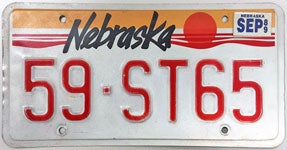
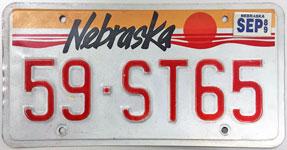
Nebraska license plate form 1987-1989
Issuance of flat digital license plates began in November 2003.
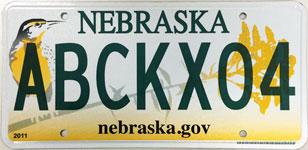
Beginning with the 2005 issuance of license plates, reissuance will occur every six years. Issuance of full size trailer plates also began in 2005.
 Powered by